Current Research

At Feelings First Counseling, research is not separate from clinical work it is part of how we understand people more deeply. Current research focuses on how emotions, relationships, and attachment patterns shape the way we connect with ourselves and others, and how those experiences can support meaningful change in therapy.
I am actively involved in research that bridges clinical practice, relationship science, and emotional well being, with a focus on translating findings into real world therapeutic work that is practical, usable, and grounded in lived experience.

Dual-Career Couple Study (Ongoing Research - Currently Recruiting Participants)
This ongoing study explores how dual-career couples navigate the emotional, relational, and logistical complexities of maintaining both individual professional identities and a shared partnership. As more couples balance demanding careers alongside intimate relationships, there is a growing need to understand how these dynamics influence connection, communication, stress, and long-term relational satisfaction.
This research examines how couples manage competing responsibilities, negotiate emotional labor, support one another’s goals, and maintain relational closeness amid career-related pressures. Particular attention is given to patterns of attachment, emotional expression, conflict resolution, and mutual support within the relationship.
The goal of this study is to better understand what helps dual-career couples not only manage external demands, but also sustain emotional intimacy, partnership satisfaction, and a sense of shared meaning over time.
Findings from this work aim to inform both clinical practice and relationship interventions, offering insight into how therapists can better support couples navigating career-driven stress, role balance, and evolving relational needs.
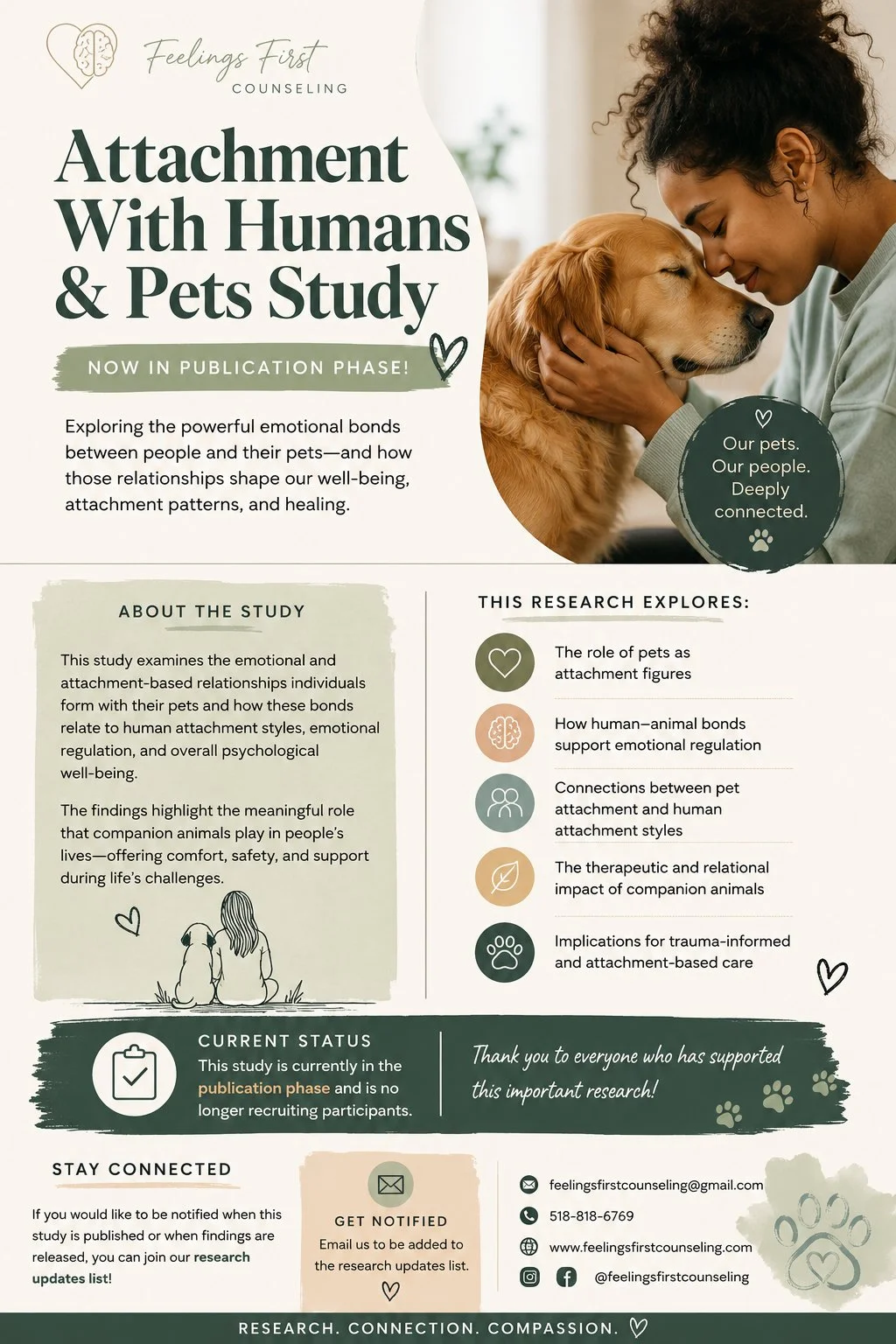
Attachment With Humans and Pets Study
( In Publication Phase)
This study examines the emotional and attachment-based relationships individuals form with their pets, and how these bonds relate to human attachment patterns, emotional regulation, and overall psychological well-being.
At Feelings First Counseling, this research explores the meaningful role that companion animals play in emotional life particularly as sources of comfort, stability, and connection during periods of stress, grief, loneliness, and transition. Many individuals experience their pets as significant attachment figures, and this study seeks to better understand that bond within a psychological and relational framework.
The findings highlight how human animal relationships may interact with attachment styles in human relationships and contribute to emotional support, resilience, and regulation. This work also considers the therapeutic implications of recognizing animals as part of an individual’s broader attachment system.
This study is currently in the publication phase, with findings being prepared for dissemination to contribute to both clinical practice and the broader understanding of attachment, connection, and emotional well-being.
This study is currently in the publication phase, and is no longer recruiting participants.

Therapist Perspectives on Canines in Therapy Study
(In Publication Phase)
This study explores how mental health professionals experience and understand the presence of canines in therapeutic settings, particularly within animal-assisted and canine informed interventions.
Focusing on the clinician’s perspective, this research examines how therapists perceive the role of dogs in the therapeutic process, including their impact on client engagement, emotional regulation, rapport building, and the overall therapeutic environment. It also considers how clinicians integrate animal-assisted elements into their clinical work, and how these experiences shape their understanding of attachment, safety, and relational connection in therapy.
Rather than focusing solely on client outcomes, this study centers the professional voice of therapists working alongside canines in practice. It highlights how animals may influence clinical presence, attunement, and the emotional dynamics of the therapy room.
This research is currently in the publication phase, with findings being prepared for dissemination to contribute to the growing field of animal assisted therapy and to inform more nuanced, clinically grounded understanding of canine involvement in mental health treatment.
This study is currently in the publication phase, and is no longer recruiting participants.